
in the beginning...
i got into design long before i knew that “designer” was something i could become.
my mum ran a graphic design and print shop, and growing up, i spent a lot of time around it. there were always computers, printers, designs being worked on, and people coming in with something they needed made. sometimes i got to use the computers too, which, as a kid, was probably the more exciting part.
that's where i first encountered tools like photoshop 7 and coreldraw 8. i wasn't thinking about typography, visual hierarchy, user experience, or any of the language i use to describe my work today. i was just curious. i'd open things, move things around, try effects, make things that probably looked terrible, and generally figure out what happened when i clicked something.
the computers were only one part of the experience, though.
because the things being made on them didn't stay on them.
i'd see something start as a design on a screen and eventually become something you could hold, hang up, wear, or put somewhere. i didn't have the language for the process then either. i just saw it happen often enough that, over time, i started to understand how the different pieces fit together.
for jobs like flyers, posters, and brochures, for example, that could mean taking a design through colour separation and lithography before it eventually made its way onto a press like the heidelberg gto. but that was just one process among many i encountered. there was direct imaging, large-format and flex printing, screen printing, monogramming, die cutting, and printing on all sorts of things beyond paper.
the thing being made determined the process, and the process determined what needed to happen to the artwork before it could become the thing someone was waiting for.

none of this felt like learning a profession at the time.
i was mostly just playing, watching, asking questions, and picking things up because they were there.
as i got older, playing with design gradually became actually doing design. in 2016, i started freelancing as a graphic designer.
that pulled me deeper into branding and identity work, and eventually, around 2020, into ux and product design.
learning to build
product design gave me a different part of the process to understand.
i could design an interface in figma, but there were suddenly decisions being made after that point that i didn't understand nearly as well.
why did certain ideas become difficult to build? why did something that seemed simple in figma become complicated in code? why did some decisions survive implementation while others changed completely?
eventually, being curious from the design side wasn't enough.
so i started learning to build.
frontend development gave me a much better understanding of the consequences of my design decisions. things i'd previously thought about mostly in terms of layout or interaction suddenly had another dimension: implementation, performance, state, responsiveness, accessibility, and all the small decisions required to make an interface actually work.
i liked that. understanding more of the system made me better at doing mine, and gave me more ways to help when the lines inevitably blurred.
the more i learned, the less interested i became in treating design and development as completely separate worlds.
i still consider myself a designer first. but i'm increasingly comfortable crossing the line when the work requires it.
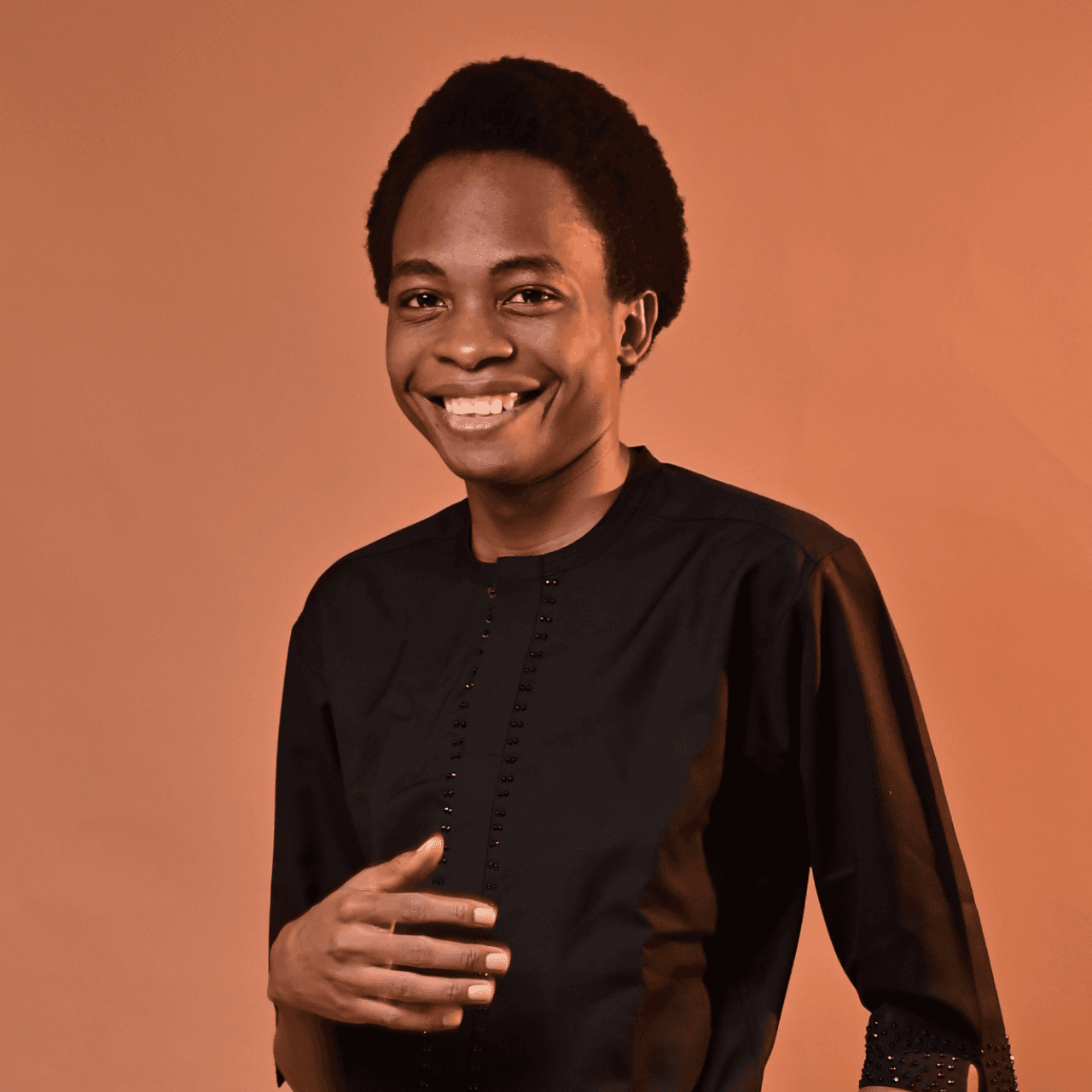
i like to play
i've always liked experimenting.
sometimes that means trying a new tool or technology. sometimes it's making something for no particularly serious reason. sometimes it's taking an idea further than necessary simply because i want to see where it goes.
i think play is useful.
it gives me room to make things without needing every experiment to become a case study, a business, or evidence that i've been productive.
it probably explains why i find myself drawn to playfulness in design too.
i like products that have personality. small details people weren't necessarily expecting. interactions that reward curiosity. copy that sounds like it was written by an actual person.
not everything needs to be funny, animated, or clever.
but i think there's room for software to feel alive.
a little bit of space
in 2025, i participated in nasa's international space apps challenge.
our project started with a fairly difficult question:
"how do you take the enormous amount of climate data available to us and make some of it useful to an ordinary person?"
climate data can be incredibly detailed, but detailed doesn't always mean approachable. we wanted to build something that helped people understand some of that information in relation to their own lives and, hopefully, make more informed decisions because of it.
the challenge itself was intense, and i ended up doing a little bit of everything.
i worked on the user interface and experience, presentation design, copywriting, frontend development, and devops. there wasn't really enough time to worry about whether something fell neatly within my job description. if it needed doing and i could help, i did.
i enjoyed that more than i expected.
it reminded me that some of my favourite environments are the ones where disciplines overlap; where design conversations become engineering conversations, engineering decisions affect the story we're trying to tell, and everyone is trying to figure things out together.
our project went on to become a global nominee in the 2025 challenge.
the nomination was exciting, of course. but i think what stayed with me more was the experience of working with a group of people (two, to be fair), under ridiculous time constraints, on something none of us could have made alone.
building my own things
crossing between different parts of the work is one thing. being responsible for the thing itself is another.
cofounding i38 agency gave me my first real experience of that.
being on the agency side of a client relationship taught me fairly quickly that the thing a client asks you to make isn't always the thing they actually need. sometimes the work is designing. sometimes it's asking better questions. sometimes it's explaining why you don't think their original idea will work. and sometimes it's figuring out how to make something good within constraints you definitely wouldn't have chosen yourself.
and then i started building things where there wasn't a client on the other side at all.
some became businesses. some became side projects. some remained ideas in a folder somewhere, waiting for me to remember why i thought they were brilliant at 2 a.m.
colosach was one of the ones that made it out of the folder.
colosach grew out of my interest in african art and representation. i'd noticed how difficult it could be to find certain kinds of african imagery online, particularly when you wanted something that felt specific rather than generically “african.”
i wanted to explore what a platform built around that problem could look like.
the idea became an afrocentric image repository, with print-on-demand and experiments around solana forming parts of the wider product. building it pulled together a lot of things i'd accumulated over the years: branding, product design, writing, social media, technology, and the less glamorous work of trying to turn an idea into something people might actually want.
building your own product is a very good way to discover how many assumptions you make when you're designing someone else's.
it's also a very good way to discover how much you still don't know.
i've had plenty of both.
and sometimes, apparently, you don't even realise you're building a product when you start.
during the christmas holidays of 2024, spotify renewed my subscription.
i wasn't really using it anymore. i'd found myself preferring youtube music, and the charge reminded me of something i'd been putting off for a while: figuring out exactly how much i was spending on subscriptions every year.
so i opened a google sheet.
the plan was simple enough. list everything, add it up, stare at the number for a bit, and move on with my life.
except my subscriptions weren't all in the same currency.
some were in naira. some in euros. others in us dollars.
so the spreadsheet needed currencies.
then conversions.
then exchange rates that updated automatically.
with some help from chatgpt and google finance, what was supposed to be a quick list slowly became a tiny subscription tracking system.
i eventually wrote about the experiment online.
one of my friends, Aremu Oluwagbamila, read the article and asked for a copy of the spreadsheet.
he thought he was spending somewhere around ₦100,000 a year on subscriptions.
the spreadsheet disagreed.
it was more than ₦500,000.
Aremu posted the discovery on his whatsapp status, where his former coworker and friend Samad saw it and asked where the numbers had come from.
“google sheet.”
Samad had another question:
“so where's the app?”
there wasn't one.
but the question eventually made its way back to me.
Aremu asked if i wanted to turn the spreadsheet into an app.
"no problem," i said.
"let's build this thing."
that became xtrackr.
i handled the naming, branding, and initial designs within a week. getting an actual app into people's hands took considerably longer.
the first version went live in august 2025, and xtrackr is now available on android and ios.
as of writing this, 195 people have signed up across both platforms, and 19 of them are subscribed.
those aren't enormous numbers.
but considering the whole thing started with a google sheet i made because spotify charged me during the christmas holidays, i'm quite fond of them.
one of the more interesting things since launching has been seeing what people actually choose to track.
it isn't always netflix, spotify, or some other digital subscription.
people have added their rent, bus cards, monthly groceries, and other expenses that simply happen again and again.
we'd started by thinking about subscriptions.
our users were thinking about recurring spending.
there's a difference.
and it's changing the way we think about xtrackr. we're exploring expense tracking and other ways to make it useful beyond subscriptions, while holding on to what made the original spreadsheet useful in the first place: knowing where your money is going.
and yeah, Samad got his answer.
starting a small rebellion
then there's another kind of building entirely.
i also make clothes.
or, perhaps more accurately, i like putting things i believe, think, or find funny on things i can wear.
there's something i enjoy about being able to control my own narrative. to tell my own stories, make my own things, wear my own merch, and decide for myself what any of it means.
eventually, i started wondering what it would look like to build something around that instinct.

i've been quietly working on a merchandise platform that gives me somewhere to explore those ideas properly. there are currently six collections, and each one comes from a different story, thought, joke, belief, or period of my life.
some are more serious than others.
the common thread is that they're mine.
and eventually, i'd like other people to be able to do the same; to take the things they care about, turn them into something tangible, wear them, share them, and maybe find a few other people who care about the same strange thing.
a community, perhaps.
a rebellion, if we're feeling dramatic.
a small religion if things get completely out of hand.

it's still in the works.
i'll probably have considerably more to say about it when it launches.
beyond design
for all the time i spend making things, i try not to let work become the only thing i'm interested in.
i like art, music, film, games, technology, and the internet in the broad, slightly unhealthy sense of the word.
i'm interested in the things people make, but also why they make them. how communities form around ideas. why certain stories travel. why some products become part of people's identities while technically better ones disappear.
i read about things that have absolutely nothing to do with whatever i'm currently working on and then, inevitably, discover that they have something to do with it after all.
i think having interests outside your discipline makes you better at the discipline.
or, at the very least, more interesting at lunch.
the things around the work
i write too.
sometimes about design and technology. sometimes about things i'm building. sometimes about crushes. sometimes because i've been thinking about something for long enough that putting it into words seems like the only reasonable way to get it out of my head.
writing forces me to make my thinking legible.
it's easy to believe you understand something until you try to explain it clearly to another person.
i've found that useful in design, in development, in leadership, and pretty much everywhere else.
there's also community.
a lot of what i know came from people sharing what they knew before i had anything useful to give them in return. articles, tutorials, conversations, feedback, open-source projects, strangers on the internet answering questions someone else had already asked.
i try to participate in that exchange where i can.
in late 2025, that took on a much more literal meaning.
when framer opened applications for people to host local meet-ups, i applied. that eventually made me a framer community ambassador in vaasa, and consequently, the first one in finland.
there was just one small problem.
i had never hosted an event before.
i'd attended events, of course. i'd been part of communities. but being the person responsible for bringing one together was completely new to me.
and, as i quickly discovered, “hosting an event” is a very short phrase for a surprisingly long list of things.
i needed a venue. people needed to know the event existed. there had to be something worth showing up for. there were sponsors to talk to, a team to put together, a guest speaker to invite, food to figure out, and dozens of smaller decisions i hadn't known existed until they became mine to make.
so i learned by doing what i'd done with most unfamiliar things up to that point: figuring out one part, then the next.
eventually, we were ready for the first kickoff meetup in vaasa.
48 people registered. 24 showed up.
hosting it gave me a completely different perspective on what it takes to bring people together.
because a community is something you build too.
just not in figma.
i followed the kickoff with two hands-on workshops later that year, which gave us a chance to move beyond simply gathering people in a room and actually learn together.
i wrote about the experience afterwards, partly because it was my first time hosting an event and partly because i'd learned far too much the hard way not to leave some notes for the next person.
i'd spent years benefiting from communities built by other people.
it felt good to finally build a little bit of one myself.
where i am now
these days, the easiest description is probably that i'm a product designer who knows enough code to get himself into trouble.
but even that feels slightly incomplete.
i design.
i build.
i write.
i start things.
i occasionally convince other people to start things with me.
and i'm increasingly less concerned with finding the perfect label for all of it.
what matters more to me is being able to move between the different parts of making something: understanding the problem, shaping the idea, designing the experience, communicating it clearly, and, when necessary, helping build the thing itself.
looking back, the tools have changed quite a bit.
photoshop 7 and coreldraw 8 became figma and code. print jobs became interfaces, products, businesses, and occasionally, spreadsheets that got slightly out of hand.
but the part that keeps pulling me forward hasn't changed nearly as much.
there are still enormous gaps in what i know.
that's part of what keeps this interesting.
the future
i still think about the future in terms of the things i'd like to make.
there are products i'd like to build. i'd like to explore game development properly. i'd like to keep becoming a better developer. i'd like to write more. i'd like to work on things that are technically challenging without losing the human details that made me interested in design in the first place.
but the older i get, the less the list of things matters on its own.
i want to remain curious.
i want to keep being willing to be bad at something long enough to become good at it.
i want to work with people who care about the details but don't take themselves too seriously. people who can disagree, change their minds, teach each other things, and make something none of them would have made alone.
and i want to keep making things that leave something a little better than i found it.
years ago, i had a much more dramatic way of saying that. i wrote that i wanted to “change the world for good, one design at a time.”
for a while, i thought i'd outgrown the line. both “design” and “changing the world” had come to mean much more complicated things to me.
then someone told me that line was one of the things that made them want to work with me.
i've thought about it differently ever since.
changing the world doesn't have to mean changing everybody's world. it can be making something useful for a few people. helping someone understand something they couldn't before. making an experience less frustrating. giving someone a better way to do something. or building a spreadsheet because spotify charged you, only to discover that someone else needed it too.
so maybe i haven't outgrown the idea.
i've just become a little less dramatic about what it means.
i don't know exactly what shape any of this takes next.
but then again, the kid clicking around photoshop 7 in his mum's print shop had no idea where any of that curiosity would lead either.
so i'm okay with not knowing everything.
that curiosity stuck, after all.
"
changing the world for good, one design at a time.
"
let's connect
if you've read this far, you probably know a little more about me than “James is a designer.”
which was the point.
if you're working on something interesting, think i could bring something useful to your team, want to build something together, or just want to have a good conversation about design, technology, games, art, music, or any of the other things i've rambled about above, feel free to reach out.
i'd love to hear from you.

c
q
g
d
a
y
o
b
f
c
x
m
t
d
w
o
v
p
t
c
x
j
p
d
g
p
c
y
b
e
j
r
e
b
i
v
c
h
i
a
d
i
o
d
u
c
h
i
m
d
i
n
d
u
p
i
x
e
u
i
n
f
e
p
g
c
s
v
p
a
x
y
w
x
j
f
r
w
k
i
l